Project case studies
Databank-grounded portfolio stories showing business context, architecture and product decisions, and measurable delivery outcomes.
How to scan these case studies quickly
• Start with Context to see business constraints and scale.
• Use Approach to understand architecture and ownership judgment.
• Validate with Results and visual evidence for delivery credibility.
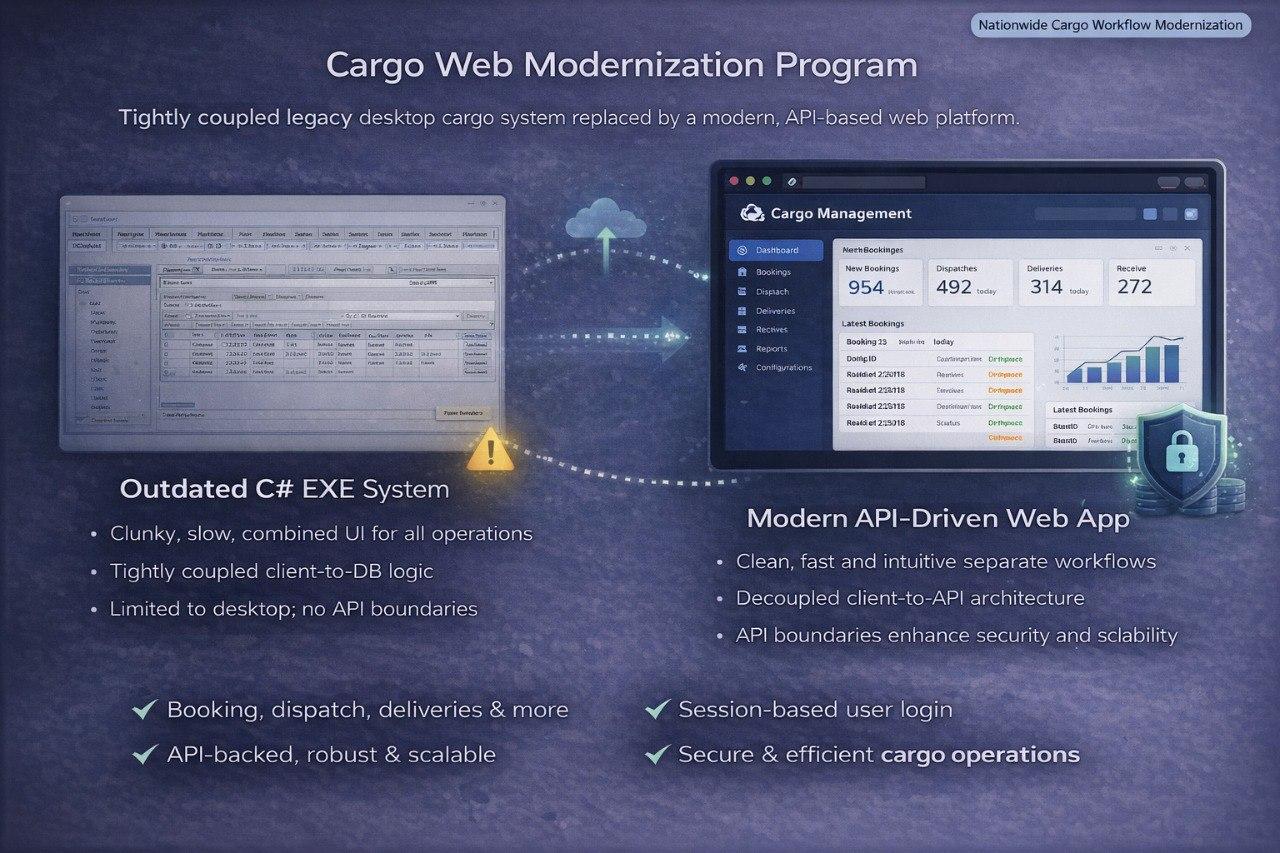
Cargo Platform Modernization (Legacy C# to API-First Web)
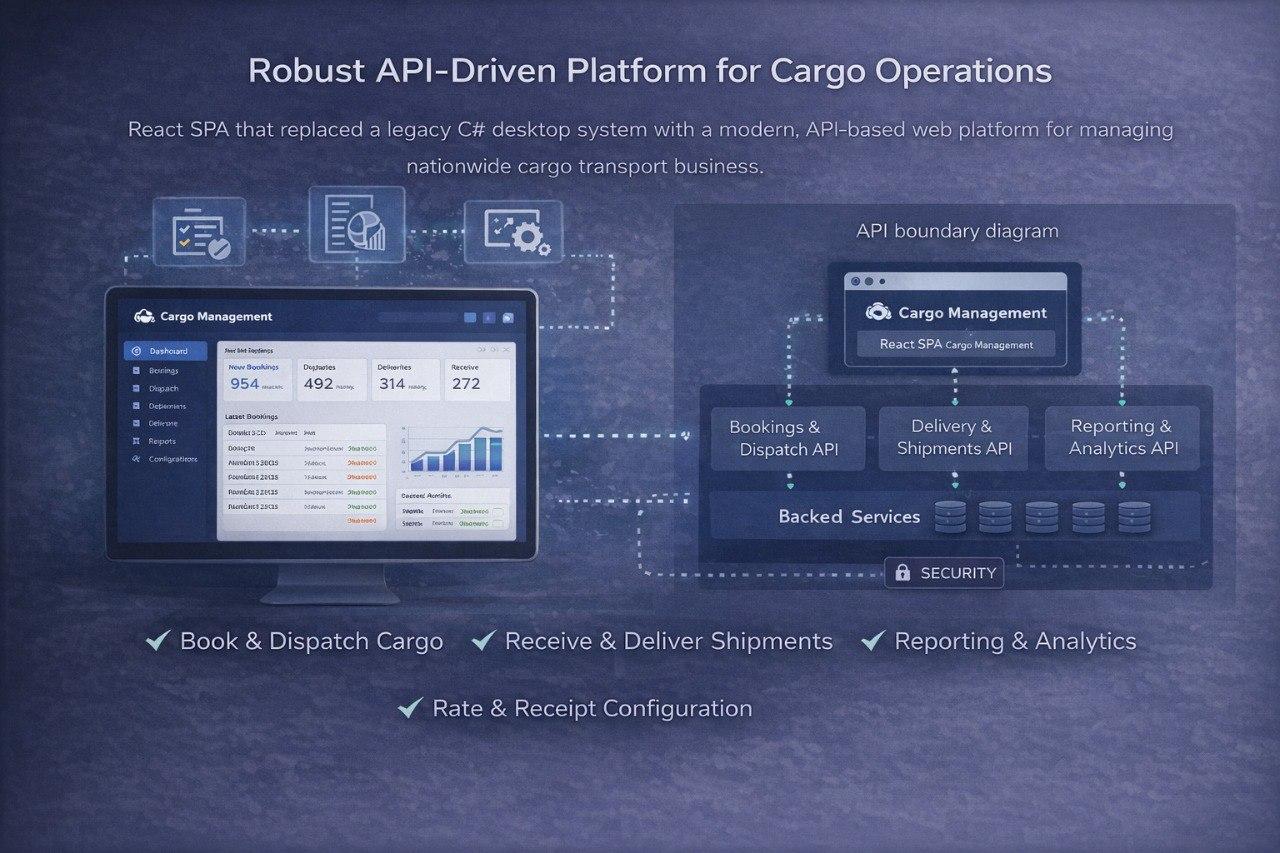
Rebuilt a tightly coupled desktop cargo system into a scalable, secure web platform with clean API boundaries.
Led end-to-end modernization of mission-critical cargo operations by separating UI from backend services and introducing workflow-focused modules for bookings, dispatch, deliveries, and analytics.
Context
• Migrated a legacy desktop workflow to a web platform used in active production nationwide.
• Legacy EXE client and direct DB dependency created opaque behavior and constrained scaling/debugging.
Approach
• Decoupled a tightly coupled EXE client from direct database dependency by introducing API-driven web architecture.
• Replaced desktop client behavior with browser-based workflows
• Introduced explicit REST APIs to expose business behavior
• Shifted diagnosis from DB-level guesswork to API-level observability
• Designed client-heavy execution paths to reduce server bottlenecks
• Defined API-first boundaries between client and backend
• Rebuilt execution flows in web client
• Shifted diagnosis to API-level observability
Results
• Backend and DB teams could isolate and scale load per API
• Operational debugging became faster and more actionable
• UI fixes became cheaper and easier to roll out
• Legacy desktop pathways were gradually retired
• Production stability improved significantly
• Better isolation of system load
• Faster operational diagnosis
• Improved production stability
• Legacy pathway phased out
Multi-Brand Booking Platform with Centralized Payments
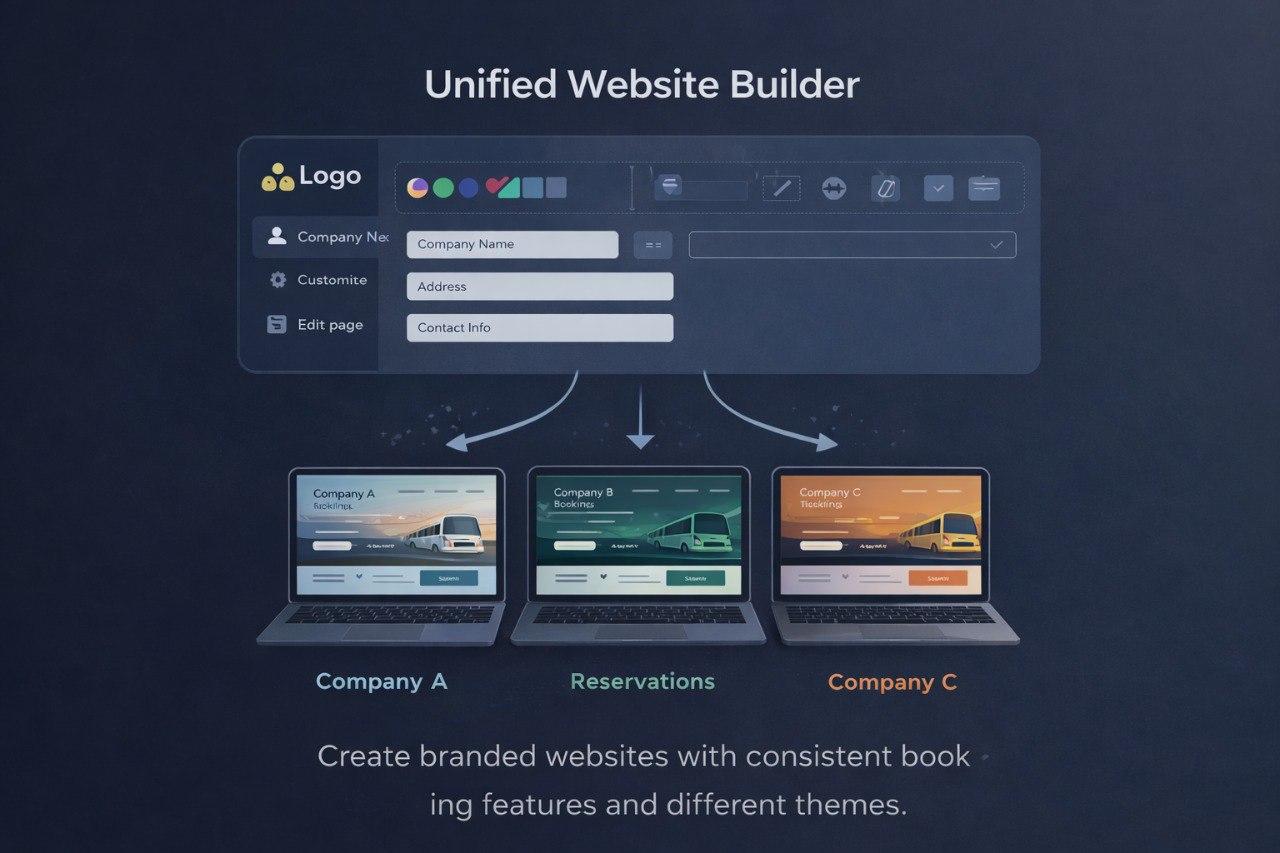
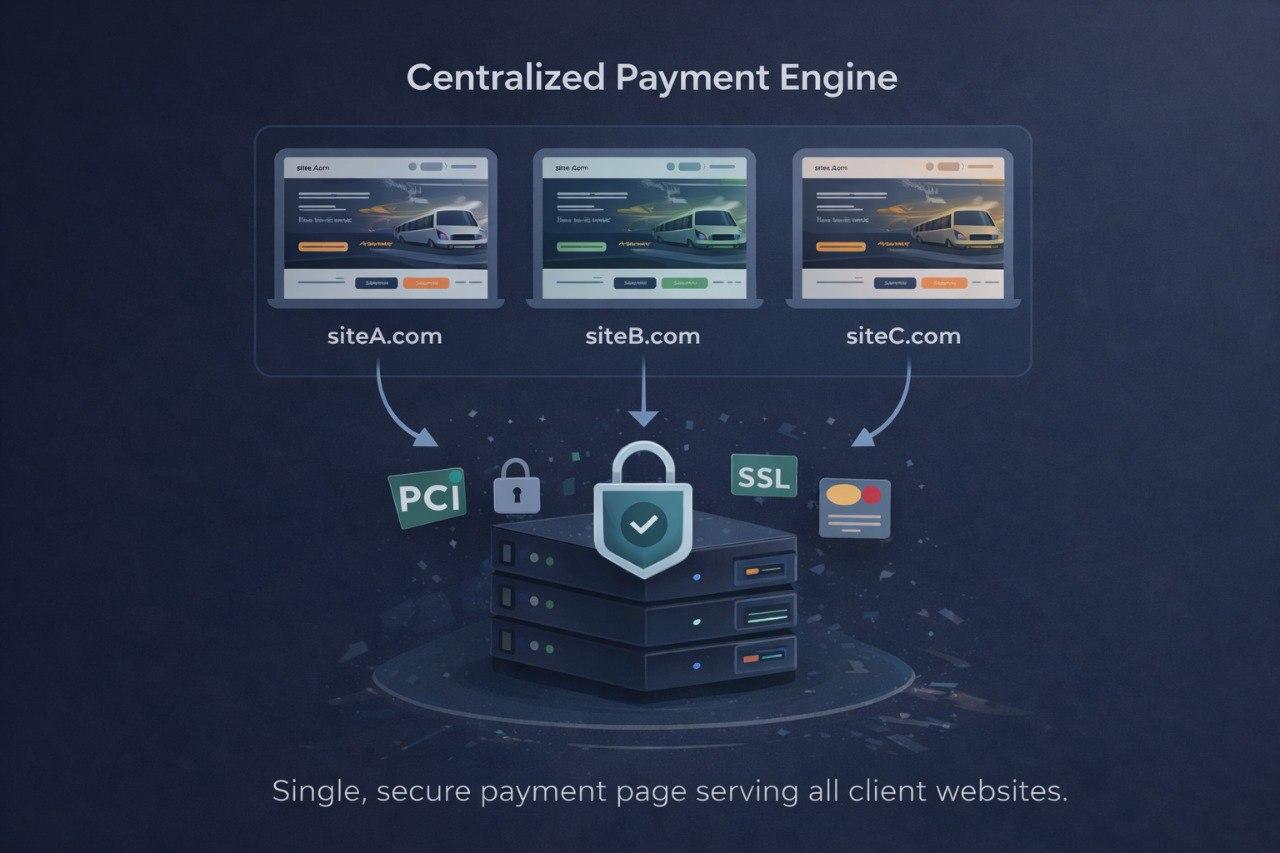
Unified multiple client sites under one configurable platform with shared booking flows and a secure payment core.
Designed a reusable, theme-driven architecture so each brand could have a custom website experience while relying on the same hardened booking, checkout, and operations backbone.
Context
• Website builder, booking workflows, payment engine, and mobile delivery model
• Fragmented implementations caused high duplication and costly maintenance/release cycles.
Approach
• Consolidated fragmented product implementations into one reusable platform and release pipeline.
• Standardized booking workflows across customer sites
• Centralized payment logic into a reusable shared engine
• Used React SPA where dynamic behavior and speed mattered
• Replaced thousands of native app variants with React Native WebView wrappers
• Standardized booking workflows
• Centralized payment engine
• Introduced React SPA where required
• Used RN WebView wrapper model to avoid per-client native duplication
Results
• Large-scale code duplication was eliminated
• Release and maintenance overhead dropped materially
• Functional changes moved to a single platform instead of per-client apps
• Non-engineering teams gained more operational autonomy
• Reduced maintenance overhead
• Single-platform functional rollout
• Long-lived architecture with low ongoing maintenance
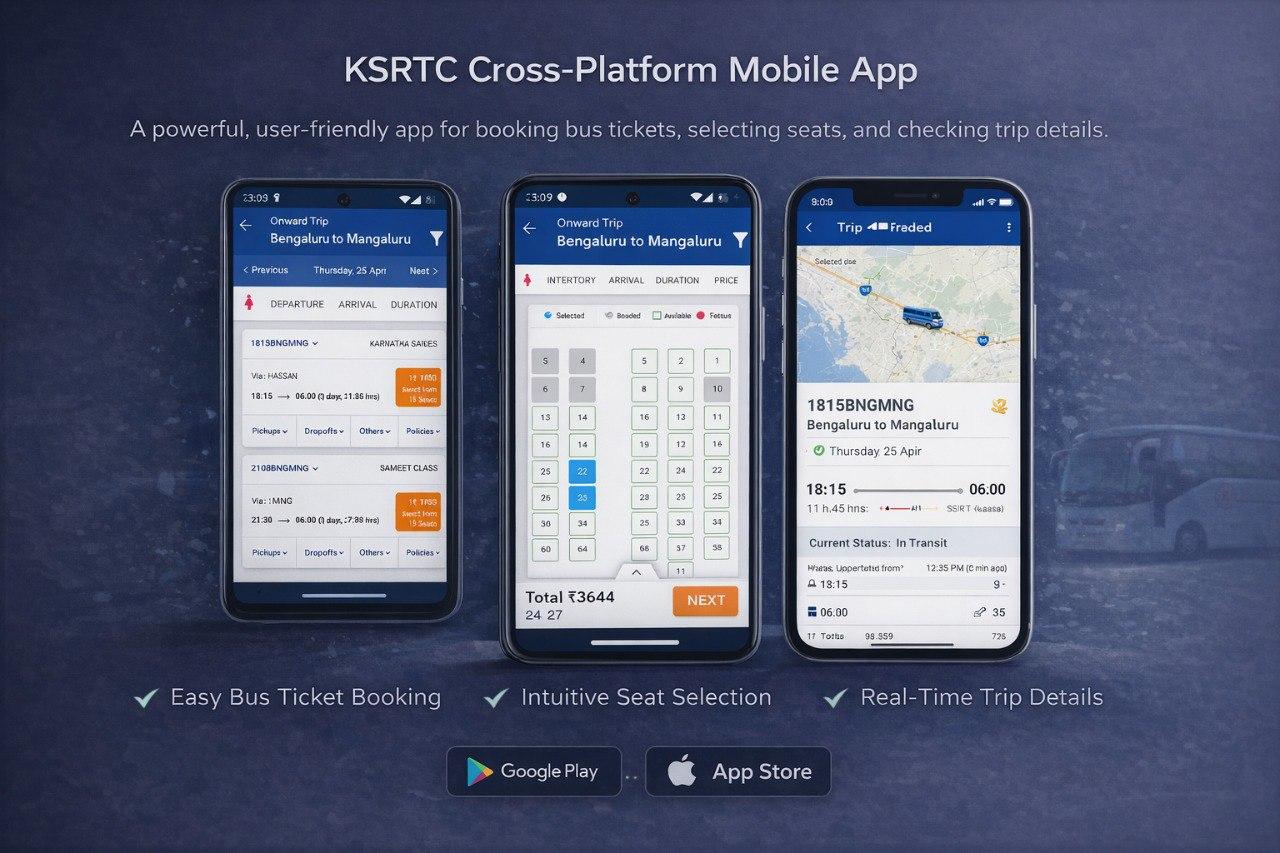
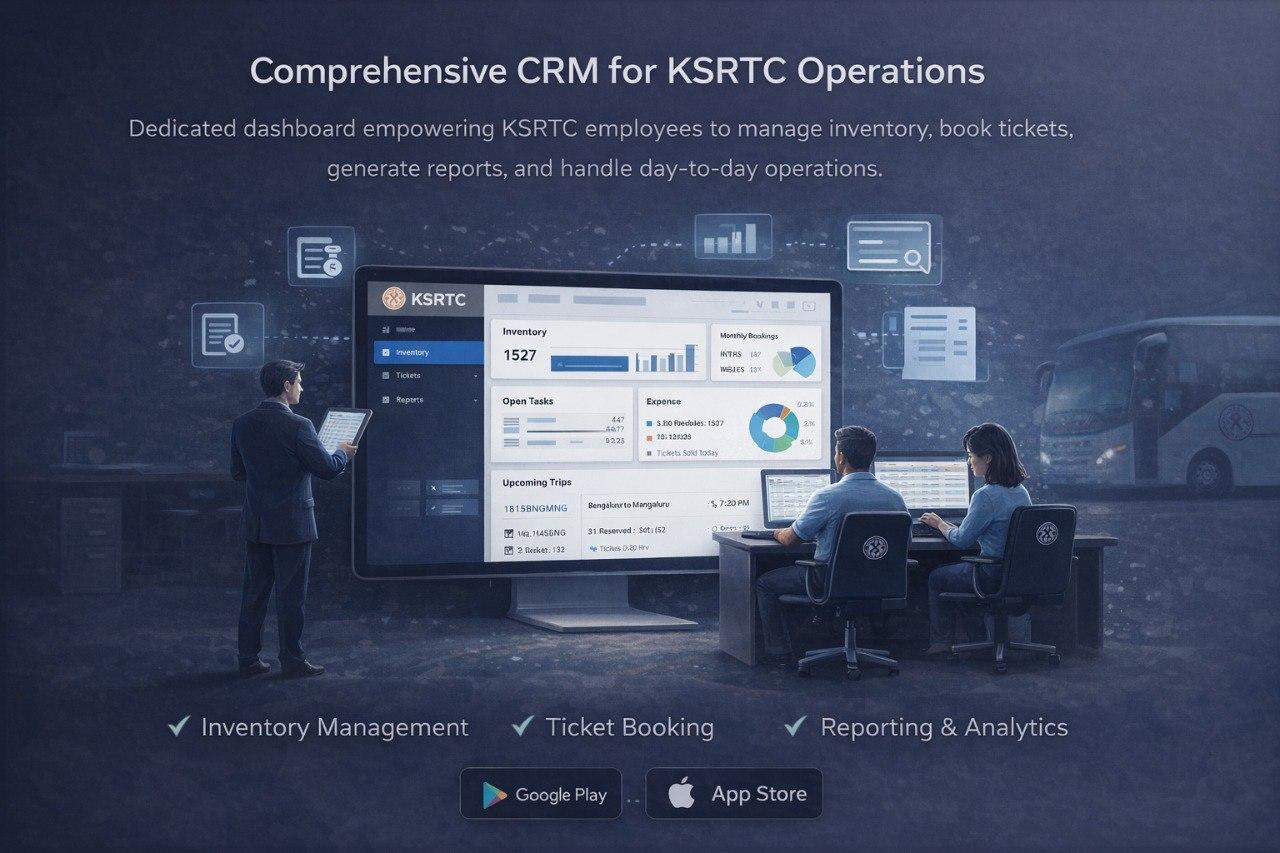
KSRTC Cross-Platform Booking App + Operations CRM
Delivered customer-facing mobile booking and an internal CRM/operations layer for public transport workflows.
Executed a deadline-critical transport product rollout covering seat selection, live trip visibility, ticket workflows, and staff-side inventory/reporting operations in one coordinated release.
Context
• Government delivery with fixed timeline and late iOS requirement
• Late iOS requirement threatened committed timeline.
Approach
• Chose a WebView-based React Native wrapper instead of a full native rebuild to de-risk deadline delivery.
• Selected React Native WebView wrapper approach over full native rebuild
• Prioritized contractual scope and delivery risk
Results
• Delivered Android and iOS apps within one week
• Met contractual delivery constraints without extending timeline
• Pattern was later reused across multiple company products
• Delivered Android + iOS in one week
• No timeline extension required
• Approach reused across future products